
How to study for long hours without getting tired
Studying 12 hours a day is possible for short stretches, and most people who claim it are counting hours at the desk rather than hours of work. What you want is the most real focus you can sustain. Here’s how to build it.
Long study days are built from blocks and real breaks, with your hardest subject first and your phone out of reach. Count focused hours rather than desk hours. Six to eight real ones beat twelve distracted ones.
Start by counting honestly
Track one normal day with a timer that only runs while you’re truly working. Most people find their “10-hour day” holds about 4 hours of real focus. That number is your true baseline. Add 30 minutes per week rather than jumping to 12 on Monday.
A 12-hour study schedule that’s realistic
| Time | Block |
|---|---|
| 7:00 to 10:00 | Hardest subject, new material |
| 10:00 to 10:30 | Walk, food |
| 10:30 to 13:00 | Second subject, practice problems |
| 13:00 to 14:00 | Lunch, away from your desk. A 20-minute nap if you can |
| 14:00 to 17:00 | Medium work, past papers |
| 17:00 to 18:00 | Exercise. Don’t skip this one |
| 18:00 to 21:00 | Revision and recall |
| 21:00 onward | Stop. Sleep is when it sticks |
That’s around 11 hours on paper. Save days like this for exam season, and treat 6 to 8 as your normal.
Choose the right focus setup for 4, 8, 10 or 12 hours
| Study day | Best phone setup | What stays available |
|---|---|---|
| 4 hours | Four 50-minute blocks or classic 25/5 Pomodoro | Notes, calculator, lecture app and calls |
| 8 hours | Two scheduled profiles: morning deep work and afternoon practice | Study tools, meals and real off-screen breaks |
| 10 hours | Long selective block with subject changes and a smaller mock-test profile | PDFs, question bank, dictionary and essential messages |
| 12 hours | One long session only for short exam-season stretches; add Pomodoro or deliberate meal breaks | Everything genuinely required for study, health and emergencies |
Medical students and professional-exam candidates: keep authentication, hospital, timetable and clinical-reference apps before locking anything. Test the profile on an ordinary day before using Hard lock. A strict setup that blocks a required app is not disciplined—it is broken.
How not to get tired
- Protect sleep first. Cutting sleep to study more usually lowers what you take in the next day.
- Eat light at lunch. A heavy meal costs you the afternoon block.
- Switch subjects when you stall. A change of subject can refresh you as well as a break.
- Rest without a screen. A 15-minute scroll isn’t rest. Your eyes and attention are still working.
- Move. Even a short walk resets a foggy head.
The real enemy of long sessions
Long days rarely fail from tiredness alone. They fail at 3 p.m. when you pick up your phone “for a second” and lose 40 minutes. The longer the session, the more chances you give that urge to win. So take away the option.
FocusComet was built for this. Hide Instagram, YouTube and the rest with Vanish mode, and run one session of up to 12 hours. Keep your dictionary, calculator and notes app. Turn on Pomodoro and your apps come back for 5 minutes every 25 minutes, then disappear again. For exam weeks, Hard lock removes the End button until the timer runs out.
Use long hours well
Hours spent re-reading feel productive and do little. Fill them with recall: close the book, write what you know, check it, repeat. Past papers beat highlighters every time.
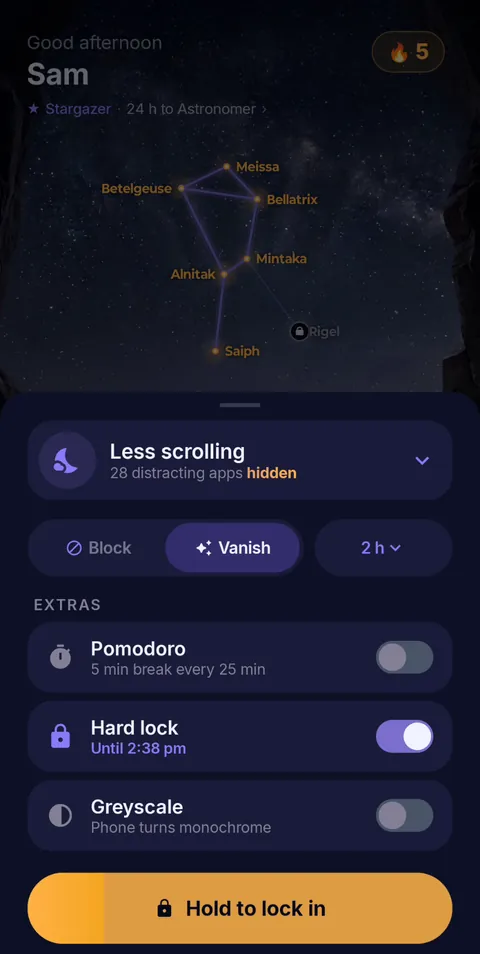 Hold to lock in
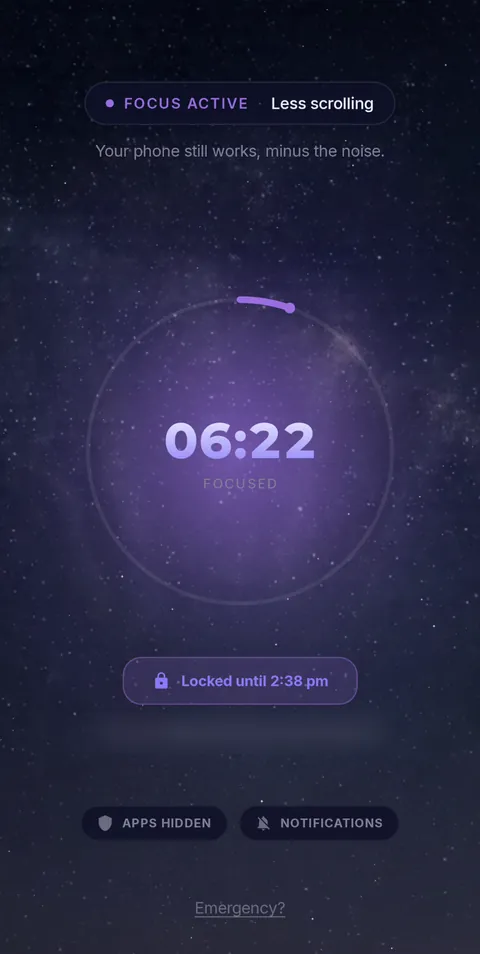 Locked until the timer ends
- Vanish Mode
- Pomodoro 25/5
- Hard lock
- Sessions up to 12 h
- Daily schedules
Up to 12 hours in one session. Zero Instagram.
Hide your distracting apps and keep the ones you study with. Free on Android, with long sessions and Hard lock for exam weeks.
Get it on Google PlayFAQ
Is it possible to study 12 hours a day?
Yes, for short stretches like exam season, with proper sleep, food and movement. Very few people sustain 12 real hours for long. Six to eight focused hours is a strong regular day.
How can I study for long hours without getting tired?
Work in blocks, take breaks away from screens, do hard subjects first, sleep properly and exercise. Rotate subjects when you stall.
How long should a study session be?
Between 25 and 90 minutes per block suits most people. Short rounds help you start, and longer ones suit deep problem-solving.
Is there an app to stop distractions for long study sessions?
FocusComet hides your distracting apps for sessions of up to 12 hours, and can add Pomodoro breaks and a Hard lock.