
The Pomodoro technique for studying
The Pomodoro technique is the most recommended study method on the internet, and most students quit it within a week. The method isn’t the reason. They do it with their phone in reach, and the 5-minute break becomes 40.
Study for 25 minutes, rest for 5, repeat. It works best for getting started and for subjects you avoid. Make it stick by planning each round in advance and keeping your phone out of the focus rounds.
What is the Pomodoro technique?
Francesco Cirillo came up with it as a student in the late 1980s, using a tomato-shaped kitchen timer. Pomodoro is Italian for tomato. The classic recipe is 25 minutes of focused work, a 5-minute break, and a longer break after four rounds.
Is the Pomodoro technique effective?
It’s very effective at the thing students struggle with most: starting. “Revise biology” is frightening. “Do 25 minutes of biology” is nothing. A short deadline also makes it easier to ignore the urge to check something, because the break is never far away.
Its weak spot is deep material. If a hard problem takes 15 minutes just to load into your head, a buzzer at 25 can feel cruel. If you’re in the middle of a thought, finish the thought, then break. For long stretches, see how to study for long hours.
How to study with it, step by step
- Write down the rounds before you start. “Round 1: chapter 4 notes. Round 2: 10 practice questions.” Deciding mid-session is how sessions die.
- Move your phone out of the round. Another room, or an app that takes the distracting apps away.
- Work on one thing only. If a stray thought shows up, write it on paper and carry on.
- Stand up on the break. Water, stretch, window.
- Use the end of a round for recall. Spend the last two minutes writing what you remember without looking. That’s where a lot of the learning sticks.
What to do on a Pomodoro break
Good breaks move your body or rest your eyes: walk, stretch, drink water, step outside. Your phone is the risky one. Five minutes of a feed rarely ends at five. You don’t have to ban it, because having it to look forward to is a large part of why the round feels doable. You need a hard edge at minute 5.
The fix for the phone problem
That hard edge is why we built Pomodoro into FocusComet. Start a session of 25 minutes or more with Pomodoro on, and your distracting apps disappear for each 25-minute round. On the break they come back. When the break ends they vanish again, whether you’re done with them or not. You never have to be disciplined at the exact moment you’re worst at it.
25/5 or 50/10?
Use 25/5 when you’re avoiding the work, tired, or new to it. Use 50/10 when the work is flowing and you’re in practice. Plenty of students use both in a day. FocusComet’s built-in Pomodoro is 25/5. For a 50-minute block, run a normal 45-minute or 1-hour session and take your break between sessions.
How many Pomodoros a day?
Four to eight rounds of real focus is a strong study day for most people, and it adds up to about 1 hour 40 minutes to 3 hours 20 minutes of work. Count rounds instead of hours. You can’t fool a count.
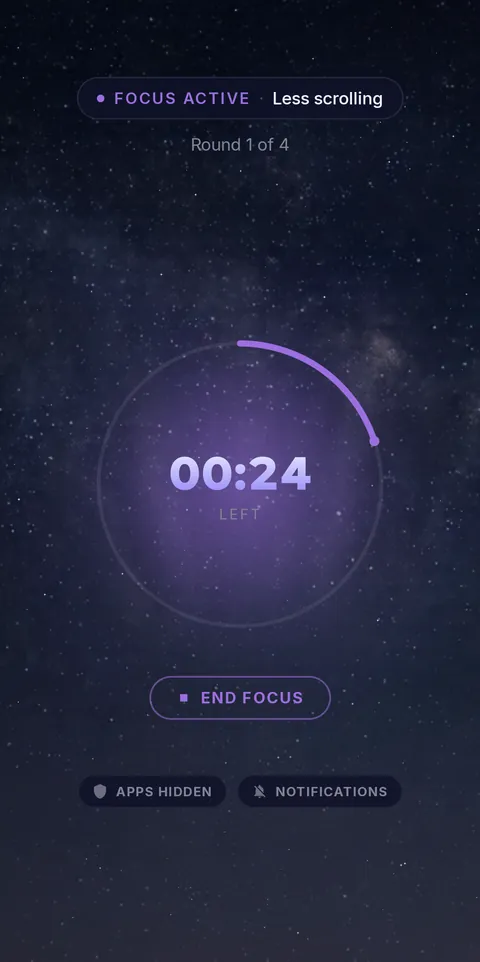 Focus round: apps gone
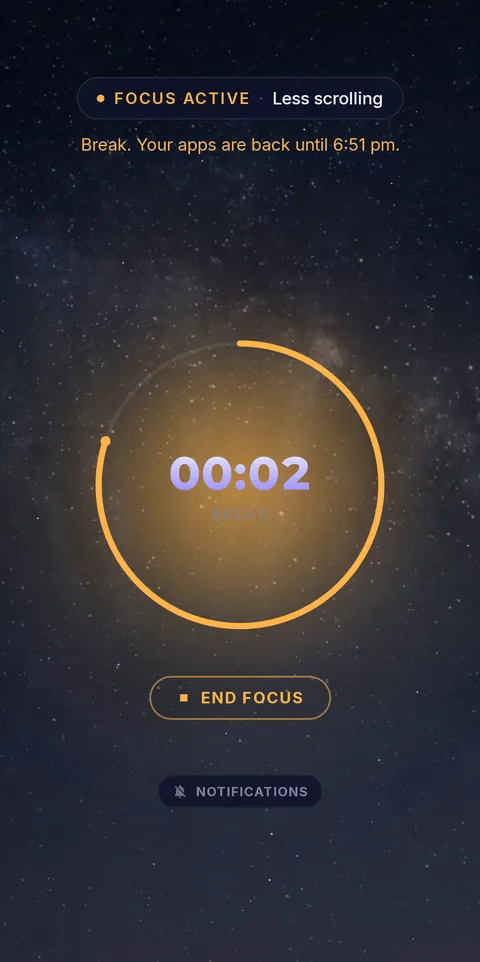 Break: apps back
Your phone goes away for 25 minutes. It comes back for 5.
FocusComet runs the Pomodoro rhythm for you and moves your apps with it. Free on Android.
Get it on Google PlayFAQ
What is the Pomodoro technique in simple words?
Work on one thing for 25 minutes, rest for 5 minutes, and repeat. After about four rounds, take a longer break.
Is the Pomodoro technique good for studying?
Yes, especially for getting started and for subjects you avoid. For long problem-solving, you may prefer longer blocks.
Can I use my phone on a Pomodoro break?
You can, as long as the break really ends at 5 minutes. An app that takes your apps away when the break ends makes that much easier.
How many Pomodoros should I do in a day?
Four to eight focused rounds is a strong day for most students. Build up from there.